

HYROX Lab · Oct 2026
Can You Train for HYROX as a Beginner?
By Karyn Guidry, Exercise Physiologist & HYROX Coach
Yes, absolutely! You can train for HYROX as a complete beginner. You don’t need to be an experienced runner, a competitive athlete, or someone who spends hours in the gym to get started. What you do need is a structured HYROX training plan that builds your fitness gradually and prepares you for the demands of race day.
One of the biggest misconceptions I see as a HYROX coach is that people think they need to be fit before they can start training for HYROX.
That’s simply not true.
HYROX combines running with functional fitness stations, which means your training needs to prepare you to run, perform strength-based movements, and keep moving even when you’re tired.
But here’s the good news: You don’t have to master everything at once.
Starting with the fundamentals will help you build endurance, develop strength, improve confidence, and create a foundation that makes your training more sustainable.
Whether you’re completely new to fitness or simply new to HYROX, here’s how I recommend getting started.
What Is HYROX and What Does a Race Involve?
HYROX is an indoor fitness race that combines 8 kilometers of running with 8 functional fitness stations.
Every standard HYROX race follows the same format, alternating a 1 km run with one workout station.
The eight stations are:
- SkiErg
- Sled Push
- Sled Pull
- Burpee Broad Jumps
- Rowing
- Farmers Carry
- Sandbag Lunges
- Wall Balls
That might sound intimidating when you first look at it.
But remember, you don’t need to be great at every station before you begin training.
The goal is to gradually improve your running endurance, full-body strength, movement efficiency, and ability to transition between different types of exercise.
HYROX rewards well-rounded fitness, not just the ability to lift heavy weights or run fast.
And that’s exactly what makes it such a great goal to work toward.
What Should HYROX Beginners Focus on First?
If you’re wondering how to start training for HYROX, I recommend focusing on four key areas.
You don’t need complicated workouts or full race simulations right away.
You need to build a foundation.
1. Build a Comfortable Running Base
Running makes up a significant portion of every HYROX race, so developing your aerobic endurance should be one of your first priorities.
But that doesn’t mean you need to start running long distances immediately.
If you’re new to running, start with run-walk intervals.
For example:
- Run easily for 2 minutes.
- Walk for 1 to 2 minutes.
- Repeat for 20 to 30 minutes.
As your endurance improves, gradually increase your running intervals and reduce your walking breaks.
Most of your early runs should feel comfortable enough that you can speak in short sentences without gasping for air.
Don’t worry about speed yet.
Your first goal is to develop consistency and allow your muscles, joints, and cardiovascular system to adapt to running regularly.
Coach’s Tip: One of the biggest mistakes beginners make is running too fast, too soon. Building an aerobic base now will make everything else in HYROX training easier later.
2. Develop Full-Body Strength
HYROX isn’t just about running.
You’ll also need the strength to push and pull sleds, carry weights, perform lunges, and complete wall balls.
That’s why full-body strength training is an essential part of your preparation.
A beginner HYROX strength routine can include:
- Squats: Build lower-body strength for sled pushes, lunges, and wall balls.
- Lunges: Improve single-leg strength, balance, and muscular endurance.
- Hip hinges and deadlifts: Strengthen your glutes, hamstrings, and posterior chain.
- Pressing movements: Develop upper-body strength and stability.
- Rows: Build pulling strength for the sled pull and other stations.
- Farmers carries: Improve grip strength, core stability, and loaded movement.
Start with weights you can control while maintaining proper technique.
You don’t need to lift as heavy as possible.
In fact, I’d much rather see a beginner consistently performing movements correctly than rushing into heavy loads before they’re ready.
Build strength first. Add intensity as your technique and confidence improve.
3. Practice HYROX Station Movements
One of the best ways to become more comfortable with HYROX is to familiarize yourself with the stations before race day.
But here’s something I want beginners to understand:
You do not need to complete a full HYROX simulation every time you train.
Instead, practice the movements in smaller, manageable amounts.
For example:
- Practice SkiErg technique at an easy pace.
- Work on sled pushing with an appropriate load.
- Learn efficient rowing mechanics.
- Perform controlled burpee broad jumps.
- Practice farmers carries with manageable weights.
- Build confidence with sandbag lunges.
- Develop a consistent wall-ball rhythm.
Focus on learning how each movement should feel before increasing the intensity.
If a station is unfamiliar, work with a qualified coach who can teach you proper technique.
You can also use modified movements while developing the strength and coordination needed for the full exercise.
The goal is progress, not perfection.
4. Learn to Transition Between Running and Stations
One thing that makes HYROX different from a traditional running race or gym workout is the constant transition between endurance and strength-based movements.
You run.
You complete a station.
Then you run again.
And repeat.
This is often called compromised running, which simply means running while your body is already fatigued from another exercise.
As your fitness improves, start introducing short workouts that combine running with simple station movements.
For example:
Beginner HYROX Combination Workout
- 400m easy run
- 10 controlled squats
- 400m easy run
- 250m row
- 400m easy run
- 20m farmers carry
Keep the effort controlled and adjust the distances or repetitions to your ability.
You’re teaching your body how to move efficiently between different tasks.
You are not trying to exhaust yourself.
That distinction is important.
How Many Days a Week Should a HYROX Beginner Train?
One of the most common questions I hear is:
How often should I train for my first HYROX?
For many beginners, three to four training days per week is a great starting point.
You don’t need to train every day to make meaningful progress.
What matters most is following a routine that allows you to improve while recovering between sessions.
Example Beginner HYROX Training Schedule
| Day | Workout |
|---|---|
| Monday | Full-body strength training |
| Tuesday | Easy run or run-walk intervals |
| Wednesday | Rest or light mobility |
| Thursday | Full-body strength training |
| Friday | Rest |
| Saturday | Easy run or beginner run-and-station workout |
| Sunday | Rest or active recovery |
This schedule gives you a combination of running, strength development, and recovery.
If you’re already active, you may be able to handle additional training.
If you’re completely new to exercise, start with fewer sessions and gradually build up.
Consistency beats intensity when you’re building your foundation.
I’d rather see you complete three quality workouts every week for several months than train six days a week for two weeks and burn out.
How Long Should You Train Before Your First HYROX?
There isn’t one perfect timeline for every beginner.
Your preparation depends on several factors:
- Your current running ability
- Your strength training experience
- Your overall fitness level
- Your injury history
- Your available training time
- Your race goals
Someone who already runs regularly and lifts weights may need less preparation than someone starting from a completely sedentary lifestyle.
If you’re new to both running and strength training, give yourself several months to develop a foundation before introducing more demanding race-specific sessions.
For many beginners, a gradual progression might look like this:
Phase 1: Build Your Foundation
Focus on easy running, basic strength movements, movement quality, and consistency.
Phase 2: Develop Endurance and Strength
Gradually increase your running volume, build strength, and become more comfortable with HYROX station movements.
Phase 3: Introduce HYROX-Specific Training
Start combining running and stations, practicing transitions, and developing a sustainable race pace.
Phase 4: Prepare for Race Day
Practice pacing, station strategies, fueling, and the specific demands of your chosen race division.
You don’t need to rush into full race simulations.
Build the fitness first. Then practice putting it together.
Common HYROX Beginner Mistakes to Avoid
1. Doing Every Workout at Maximum Effort
Just because HYROX is challenging doesn’t mean every training session needs to leave you exhausted.
Training hard every day can make recovery difficult and reduce the quality of future workouts.
Keep most sessions controlled and save your hardest efforts for strategically planned workouts.
2. Increasing Running Distance Too Quickly
If you’re new to running, your cardiovascular fitness may improve faster than your muscles, tendons, and joints adapt.
That’s why gradually increasing your running volume is so important.
Pay attention to how your body responds, and don’t force progress just because you feel motivated.
3. Avoiding Movements You Find Difficult
It’s natural to gravitate toward the exercises you’re already good at.
But your biggest opportunities for improvement may come from the movements you struggle with.
If lunges are difficult, practice them in smaller sets.
If running feels intimidating, start with short intervals.
If sled work feels overwhelming, begin with manageable loads and focus on technique.
You improve by practicing your weaknesses, not avoiding them.
4. Comparing Yourself to Experienced HYROX Athletes
Social media makes it easy to compare your beginning to someone else’s years of training.
Remember that many experienced HYROX athletes have spent years developing their running, strength, and racing skills.
Your progress should be measured against where you started.
Celebrate improvements like:
- Running longer without walking
- Using better technique
- Increasing strength
- Recovering faster between efforts
- Feeling more confident with stations
Those improvements matter.
What If You’re Not Ready to Run 8 Kilometers Yet?
This is one of the biggest concerns I hear from people considering their first HYROX.
And my answer is simple:
You can start HYROX training even if you cannot run the full distance yet.
You don’t need to complete 8 kilometers before beginning your training program.
Start with run-walk intervals, develop your aerobic endurance, and gradually increase the amount of time you can run comfortably.
You can also explore different HYROX race divisions.
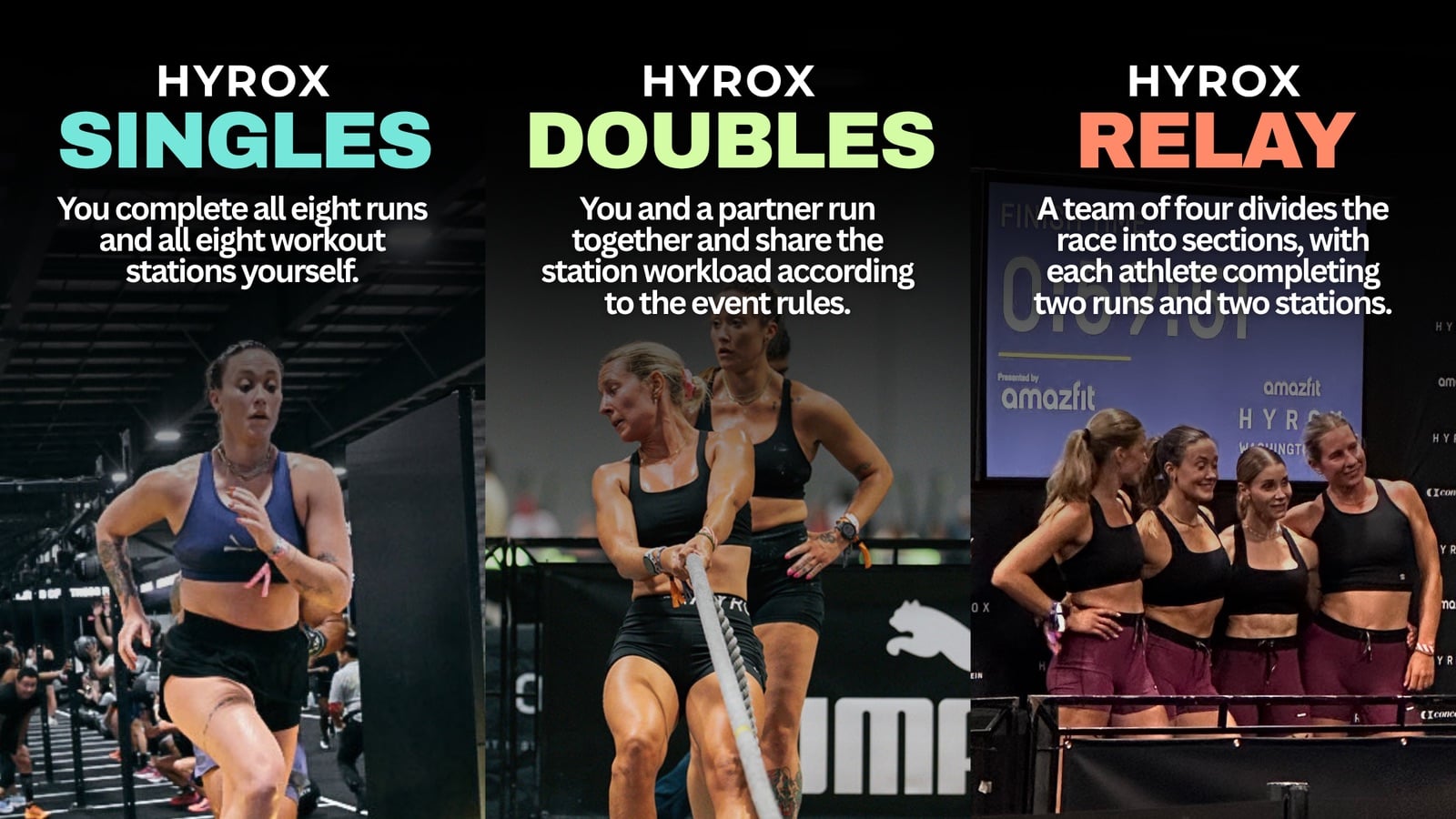
For some beginners, Doubles or Relay can be a more approachable introduction to HYROX.
Your first race doesn’t need to be about setting a fast time.
It can simply be about experiencing the event, building confidence, and crossing your first finish line.
Do You Need a HYROX Coach as a Beginner?
You can absolutely begin developing your running and strength independently.
However, having a structured training plan can help you avoid some of the most common beginner mistakes.
One of the biggest challenges I see isn’t a lack of motivation.
It’s not knowing what to train, how hard to train, or when to progress.
A good beginner HYROX program should help you:
- Build running endurance gradually
- Develop functional strength
- Learn station technique
- Introduce compromised running safely
- Balance training intensity and recovery
- Progress toward race-specific preparation
You don’t need random workouts that leave you exhausted.
You need a plan that meets you where you are and helps you improve over time.
Ready to Start Your HYROX Journey?
If you’ve been watching HYROX races and wondering, Could I actually do that?, I want you to know something.
You don’t need to be an athlete before you start. Training is how you become one.
That’s exactly why I created Couch to HYROX, a beginner-focused training program designed to help everyday adults build the running endurance, strength, and confidence needed to prepare for their first HYROX.
Whether you’re new to running, new to strength training, or simply unsure where to begin, the goal is to help you develop a foundation you can build on.
Ready to take the first step?
The Bottom Line: Can Beginners Really Train for HYROX?
Absolutely.
You don’t need to be the strongest person in the gym or the fastest runner on the course.
You need to start with manageable workouts, build your running and strength gradually, practice the race movements, and give yourself enough time to improve.
Don’t worry about being ready for the finish line today.
Focus on becoming a little more prepared with every training session.
You don’t need to be fit to start. You need to start to build fitness.
And trust me, crossing that first HYROX finish line will make the journey worth it.
See you at the start line!