

HYROX Lab · Nov 2026
How to Fuel HYROX Training: Carbs, Protein, and Meal Timing for Hybrid Athletes
By Karyn Guidry, Exercise Physiologist & HYROX Coach
A practical guide to eating for hard sessions, recovering well, and matching your fuel to the work
HYROX asks you to run, push, pull, carry, and lunge under fatigue.
Training for it means combining endurance work with demanding strength and conditioning sessions. Nutrition needs to support both.
That doesn’t mean every workout needs a gel, sports drink, or elaborate meal plan. The right approach depends on session length, intensity, time of day, and what you have eaten earlier.
For most athletes, the foundation is consistent meals, enough total energy, carbohydrates to support harder work, protein throughout the day, and a hydration plan that fits their sweat losses.
Why Do Carbohydrates Matter for HYROX Training?
Carbohydrate is an important fuel source during higher-intensity exercise.
HYROX intervals, threshold runs, race simulations, and strength-conditioning sessions can all draw on carbohydrate stored as glycogen in muscle and liver.
In a randomized crossover trial, a higher-carbohydrate pre-exercise meal increased time to exhaustion compared with a lower-carbohydrate meal or a fasted condition.
That doesn’t mean everyone needs the same meal or amount before every workout. It supports the practical idea of arriving fueled for demanding sessions.
Before Training
For a hard session, aim to eat a familiar meal or snack that includes carbohydrates. Add some protein if it works well for your stomach and timing.
Examples include:
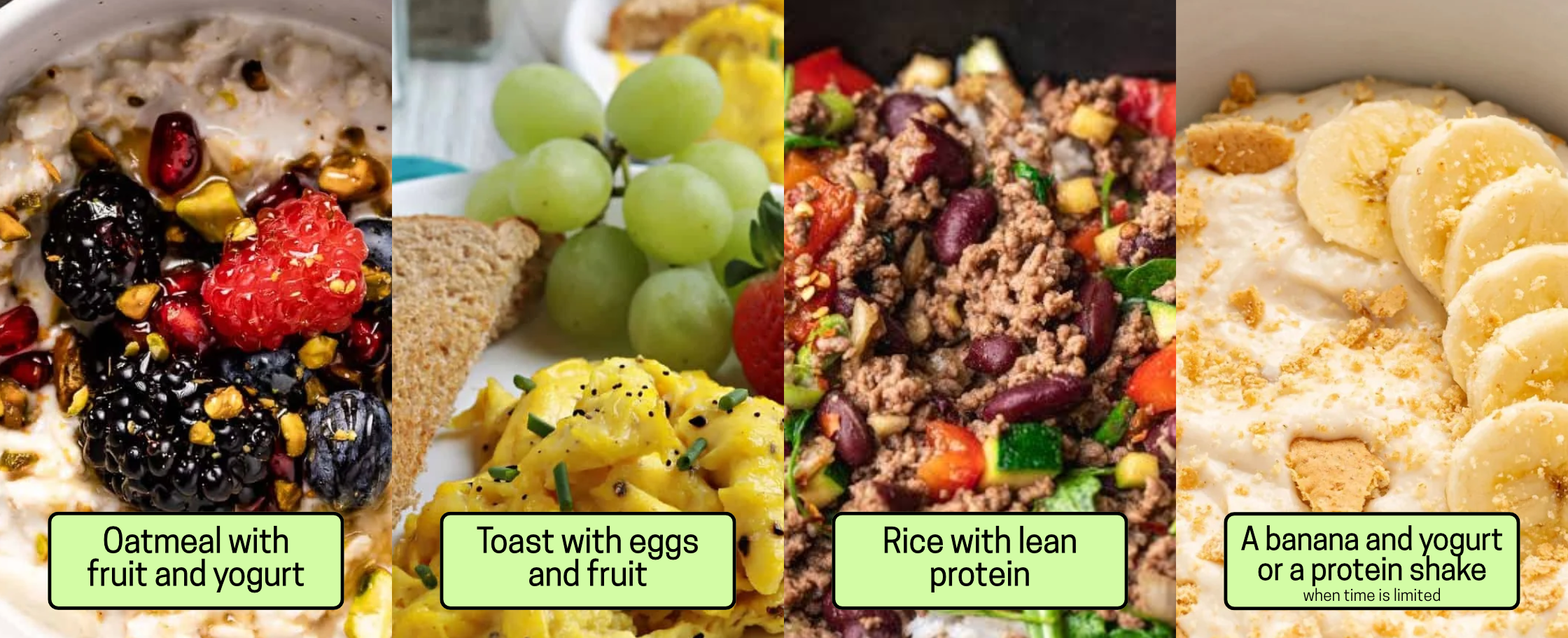
Larger meals generally need more time to digest than small snacks.
Test your timing during training instead of trying something new on race day. If eating close to exercise causes discomfort, move the meal earlier or choose a smaller, simpler snack.
During Training
For many HYROX workouts lasting around an hour, athletes who ate beforehand may not need carbohydrates during the session.
For longer workouts, especially sessions that combine a long run with stations, carbohydrate during exercise may help support performance.
Research has found benefits from carbohydrate intake during prolonged exercise, but the right amount depends on duration, intensity, tolerance, and the athlete.
If you plan to use gels, chews, or sports drink during a long session, practice with them in training. Don’t wait until race day to test your stomach’s response.
How Does Protein Support Recovery and Strength Adaptation?
Protein provides amino acids used in muscle repair and remodeling after training.
It matters for hybrid athletes because running and resistance exercise both contribute to the week’s training stress.
A controlled study of endurance-trained men found that protein after endurance exercise increased muscle protein synthesis; in that study, 30 grams was sufficient to maximize the measured response.
The participants were young men in a controlled setting, so this isn’t a universal prescription. It does reinforce the value of including a meaningful protein source after training.
Practical sources include eggs, Greek yogurt, milk, poultry, fish, tofu, beans, and protein powder when convenient.
Rather than relying on one large serving late in the day, include protein in regular meals and snacks.
After training, pair protein with carbohydrates when you have another demanding session soon or when the workout was long and depleting.
Examples include yogurt with fruit and cereal, a rice bowl with chicken or tofu, or a smoothie with milk, fruit, and protein.
How Should You Match Your Intake to the Day?
You don’t need to eat the same way every training day. Consider the work ahead:
- Hard run or HYROX simulation: Include carbohydrates before training, then have a meal or snack with carbohydrates and protein afterward.
- Strength-focused session: Keep your normal meal pattern and include protein across the day. Carbohydrates still support training, especially if the session is high-volume or follows a run.
- Easy or recovery day: Keep meals consistent and adjust portions to appetite and activity. Recovery days still support tissue repair and preparation for the next session.
This isn’t a reason to drastically restrict food on lighter days.
Your overall intake needs to support training, recovery, and health across the week.
Hydration: Personalize Instead of Guessing
Hydration needs vary with body size, temperature, exercise duration, clothing, and individual sweat rate.
Starting a session hydrated is useful, but forcing large amounts of water isn’t a performance strategy.
For most sessions, drink to thirst and consider the conditions. For long, hot, or high-sweat workouts, a more individualized plan can help.
Hydration guidance recommends accounting for personal sweat losses and avoiding both excessive fluid loss and overdrinking.
A simple estimate compares body mass before and after training while accounting for fluid consumed and any urine produced.
Electrolytes may be useful during long or hot sessions, or for athletes with high sweat and sodium losses. They aren’t automatically necessary for every workout.
If you finish training heavier than you started, you may have consumed more fluid than you lost.
A Simple Fueling Example for an Evening HYROX Workout
| When | What to Do |
|---|---|
| 2–3 hours before | Eat a familiar meal with carbohydrates and protein, such as rice with chicken or tofu and cooked vegetables. |
| 30–60 minutes before, if hungry or your meal was earlier | Have a small snack, such as a banana, applesauce, or toast. |
| During | Drink according to thirst and the environment. For a typical session near an hour, additional fuel may not be necessary if you ate beforehand. |
| After | Have a regular meal or snack with protein and carbohydrates, especially if another demanding session is scheduled soon. |
Use this as a starting point, not a rigid formula. Adjust for your schedule, appetite, digestion, and training response.
Common HYROX Fueling Mistakes
- Doing every hard session under-fueled
- Treating protein as the only recovery nutrient
- Trying new products on race day
- Overdrinking plain water
- Changing everything at once
Final Thoughts
Fueling HYROX training doesn’t have to be complicated.
Eat enough across the day, use carbohydrates to support hard or long sessions, include protein regularly, and hydrate in a way that fits your sweat losses and environment.
The best plan is one you can tolerate, repeat, and adapt to the work you’re doing.