

HYROX Lab · Oct 2026
My Number One Recovery Tip for HYROX Athletes: Prioritize Sleep
By Karyn Guidry, Exercise Physiologist & HYROX Coach
If I could give every HYROX athlete just one recovery tip, it would be this: stop treating sleep like the part of your training you can sacrifice.
As a coach and competitive athlete, I know how easy it is to focus on the things we can see and measure. Running splits, strength numbers, station times, and how hard we pushed during a workout.
And when it comes to recovery, we’re often looking for the next thing that will help us bounce back faster.
Stretching. Foam rolling. Cold plunges. Sauna sessions. Supplements.
Those tools can have their place, but here’s what I want you to understand:
None of them can consistently make up for poor sleep.
HYROX training places significant demands on your body. You’re developing running endurance, building strength, practicing stations, and learning to perform under fatigue, often multiple times per week.
But training is only part of the equation.
Your body also needs time to recover and adapt to that training.
And sleep is one of the most important parts of that process.
Research involving athletes has linked insufficient or disrupted sleep with reduced performance, increased perceived effort, and poorer recovery.
So before you invest in another recovery tool, let’s talk about the one habit I want you to prioritize first.
Why Is Sleep So Important for HYROX Training?
When you’re training for HYROX, you’re not just preparing to survive one difficult workout.
You’re trying to improve your fitness consistently over weeks and months.
That means your body needs to recover from running, strength training, and high-intensity station work so you can continue making progress.
Sleep supports that recovery process in several important ways.
1. Sleep Supports Muscle Recovery and Adaptation
HYROX workouts challenge your muscles in different ways.
Heavy sled pushes and pulls require strength. Lunges and wall balls demand muscular endurance. Running adds repetitive stress to your legs.
Your muscles need adequate recovery between these sessions.
Sleep supports the physiological processes involved in tissue repair, protein metabolism, and adaptation to exercise.
If you’re consistently cutting your sleep short, you may be making it harder for your body to recover from the work you’re asking it to perform.
Coach’s Tip: Don’t judge a successful training day only by how hard you worked. Ask yourself whether you’re giving your body enough recovery to benefit from that work.
2. Sleep Can Affect Your Running Performance and Endurance
Running makes up a major portion of HYROX, with eight separate 1 km runs throughout the race.
That means your ability to maintain pace, manage fatigue, and recover between efforts matters.
When you’re not sleeping enough, workouts may feel harder than they normally would.
You might notice:
- Your usual running pace feels more difficult.
- Your legs feel heavy during easy runs.
- You struggle to maintain intensity during intervals.
- Your energy drops earlier in workouts.
- You feel less prepared for demanding training sessions.
One poor night of sleep doesn’t automatically mean you’ll have a terrible workout.
But when insufficient sleep becomes a pattern, it can affect your ability to train consistently and perform at your best.
3. Sleep Helps You Stay Focused During HYROX Stations
HYROX isn’t just a physical challenge.
It also requires concentration, coordination, and good decision-making, especially when you’re tired.
Think about performing wall balls after several kilometers of running or maintaining proper technique during sandbag lunges.
You need to stay focused even when your body is fatigued.
Insufficient sleep can affect attention, reaction time, and decision-making.
And when you’re already tired from training, that can make maintaining efficient movement more challenging.
Better recovery helps put you in a stronger position to execute the skills you’ve been practicing.
4. Sleep Supports Training Consistency
Here’s something I remind athletes of regularly:
Your progress doesn’t come from one amazing workout. It comes from consistently completing quality training over time.
If you’re constantly exhausted, struggling to recover, or dragging yourself through sessions, maintaining that consistency becomes much harder.
You may find yourself skipping workouts, reducing intensity, or pushing through sessions that don’t feel productive.
Sleep isn’t a magic solution to every recovery problem.
But it’s a fundamental habit that supports your ability to show up, train effectively, and keep progressing.
How Much Sleep Do HYROX Athletes Need?
This is one of the first questions athletes ask when we talk about recovery.
And the answer isn’t exactly the same for everyone.
Most adults should aim for at least seven hours of sleep per night, while many athletes may benefit from eight to nine hours or more, depending on their training demands and individual needs.
Your ideal amount can depend on factors such as:
- Training volume and intensity
- Overall physical activity
- Work and family responsibilities
- Stress levels
- Sleep quality
- Individual recovery needs
If you’re training hard several days per week, regularly getting five or six hours of sleep may not give you enough opportunity to recover.
Rather than obsessing over one perfect number, I encourage athletes to pay attention to both sleep duration and how they feel.
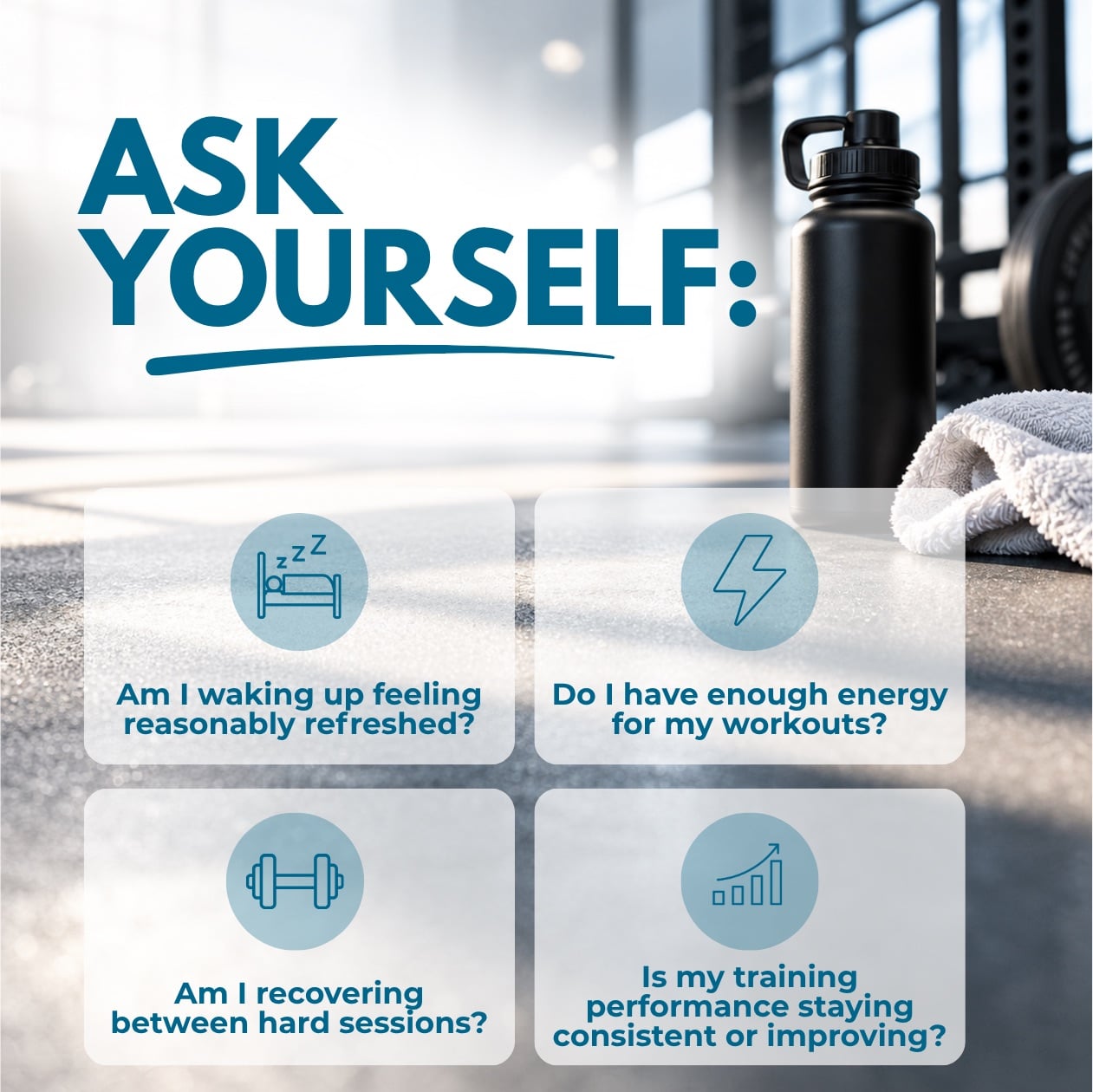
Those answers can help you understand whether your current sleep routine is supporting your training.
How to Improve Sleep for Better HYROX Recovery
You don’t need a complicated nighttime routine or expensive sleep technology to start improving your recovery.
In fact, I’d rather see you consistently follow a few simple habits than try to create the perfect routine for three days and abandon it.
Here are the habits I recommend prioritizing.
1. Give Yourself Enough Time in Bed
This sounds obvious, but it’s one of the most overlooked parts of recovery.
If you need to wake up at 5:30 a.m. for training, going to bed at midnight probably isn’t setting you up for success.
Work backward from your wake-up time and give yourself enough opportunity to sleep.
Remember that time in bed isn’t always the same as time asleep, so allow some room to fall asleep and settle into your routine.
Treat your bedtime with the same intention you give your workouts.
2. Keep Your Sleep Schedule Consistent
Your body responds well to routines.
Going to bed and waking up at approximately the same times can help support your natural sleep-wake cycle.
That doesn’t mean you need to follow an identical schedule every single night.
Life happens.
But large, frequent changes to your sleep schedule can make it more difficult to maintain consistent sleep.
Try to keep your routine reasonably predictable, including on weekends when possible.
3. Create a Simple Wind-Down Routine
If you’re constantly moving between work, family responsibilities, training, and everything else life throws at you, it can be difficult to switch off at night.
Give yourself a little time to transition into sleep.
That might mean:
- Dimming the lights before bed
- Putting your phone away
- Reading or listening to something relaxing
- Taking a warm shower
- Keeping your bedroom cool, dark, and quiet
- Avoiding caffeine too close to bedtime
You don’t need to do every single one of these things.
Choose a few that work for your lifestyle and practice them consistently.
4. Pay Attention to How You Feel, Not Just Your Sleep Tracker
Wearable devices can provide useful information about sleep duration and patterns.
But I don’t want athletes becoming so focused on their sleep scores that they forget to pay attention to their bodies.
A sleep tracker is an estimate, not a perfect measurement of recovery.
If your watch says you slept well but you feel exhausted, that matters.
And if you get a lower sleep score one night but feel reasonably good, you don’t necessarily need to panic or cancel your workout.
Look at trends over time.
Consider your energy, mood, soreness, motivation, and training performance alongside the data.
Use your sleep tracker as a tool, not the final authority on how recovered you are.
5. Adjust Your Training When Recovery Is Poor
This is especially important for HYROX athletes who are motivated to push through difficult workouts.
Sometimes the smartest training decision isn’t to push harder.
It’s to recognize when your body needs a little more recovery.
If you’ve had several nights of poor sleep and you’re feeling unusually run down, consider adjusting your session.
You might:
- Reduce the intensity of your workout.
- Replace a hard run with an easy aerobic session.
- Lower your strength training volume.
- Focus on station technique instead of speed.
- Take an additional recovery day when needed.
One adjusted workout isn’t going to ruin your HYROX preparation.
But repeatedly ignoring fatigue can make it harder to maintain quality training over time.
Smart training means knowing when to push and when to recover.
Can Better Sleep Improve HYROX Performance?
Improving your sleep habits can support better recovery, training readiness, and overall athletic performance.
But I want to be clear about something.
Getting eight hours of sleep doesn’t automatically make you faster.
You still need a structured training plan, progressive strength work, aerobic development, station practice, and appropriate fueling.
What sleep does is help support your ability to benefit from that training.
Think of it this way:
You can follow an excellent HYROX training program, but if you’re constantly exhausted and struggling to recover, you may not be getting as much out of your sessions as you could.
Training creates the stimulus. Recovery gives your body the opportunity to adapt.
And sleep is a major part of that recovery.
Recovery Is More Than Sleep, but Sleep Comes First
I don’t want you to think that sleep is the only thing that matters.
Proper nutrition, hydration, sensible training progression, and rest days are all essential parts of HYROX recovery.
And depending on your preferences and circumstances, other recovery practices may help you feel better between workouts.
But if you’re asking me where to start, my answer is simple.
Start with your sleep.
Before spending money on another recovery gadget or adding another supplement to your routine, take a look at your current habits.
Are you consistently giving yourself enough time to sleep?
Are you staying up late scrolling even though you have an early training session?
Are you treating recovery as something optional instead of part of your training?
Sometimes the most effective improvement isn’t adding something new.
It’s getting more consistent with the basics.